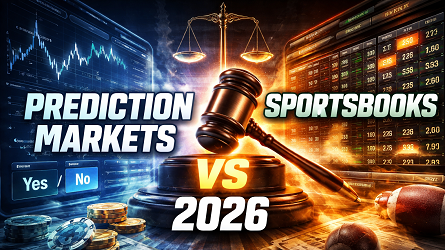
Prediction Markets vs Sportsbooks: The 2026 Legal Fight Reshaping US Betting
Prediction markets have exploded in popularity - especially once “event contracts” started looking a lot like sports betting. Now the industry is running into a fast-growing wall of lawsuits and enforcement actions, and the outcome could reshape how Americans place wagers in the next few years.
In simple terms: states say these products are unlicensed sportsbooks, while prediction market operators argue they’re federally regulated derivatives overseen at the national level. That tug-of-war is already playing out in courts across the US.
What is a prediction market (and how is it different from a sportsbook)?
A prediction market is a platform where people buy and sell contracts tied to real-world outcomes (for example, “Team A wins” or “Yes/No”). The contract price moves based on demand so the market price becomes a kind of crowd forecast.
A traditional sportsbook works differently: the book sets odds, takes the opposite side (directly or indirectly), and manages risk with limits, pricing, and trading models. Sportsbooks are typically regulated state-by-state in the US with licensing, auditing, and consumer protection rules.
The controversy started when prediction products began offering sports-style contracts that, from a user’s point of view, can feel extremely similar to placing a bet.
Why prediction markets are trending in 2026
1) They’re growing fast—and regulators noticed
Coverage in February 2026 highlights the scale of the legal backlash as these platforms expand, especially when sports markets are involved.
2) The “who regulates this?” question is unsettled
Operators argue their products fall under the umbrella of federal derivatives oversight, while state authorities argue they function like gambling and should follow state gaming laws.
3) Courts are already issuing meaningful decisions
Industry reporting includes examples of state-level actions and court rulings that have temporarily restricted activity in specific jurisdictions—evidence that this isn’t theoretical anymore.
The center of the storm: sports event contracts
Two names come up repeatedly in the current news cycle:
Recent reporting describes a wave of litigation and enforcement pressure focused on whether sports-related contracts are effectively sports wagering.
At the federal level, the Commodity Futures Trading Commission is central to the debate because prediction market operators often point to federal oversight as the reason state regulators should not be able to block them.
At the state level, gaming authorities argue the opposite: if it looks and behaves like sports betting, it should be licensed and regulated like sports betting.
What states are doing: cease-and-desists and court fights
Multiple states have been reported as taking action (or being involved in litigation) around sports event contracts. Examples commonly cited in legal and industry coverage include:
-
New Jersey — A widely discussed dispute includes a state cease-and-desist and subsequent litigation over whether federal law preempts state enforcement.
-
Massachusetts — Legal analysis coverage points to court activity treating certain sports event contracts as subject to state gaming laws.
-
Nevada — Reporting has described court action temporarily blocking sports-related offerings tied to prediction products in the state.
Why this matters to bettors (and to the US gambling market)
1) Availability can change quickly
If your state regulator takes action, a product can be restricted, geoblocked, or pulled while lawsuits play out. That can affect open positions, access, and continuity of play.
2) Consumer protection may differ from licensed sportsbooks
State-licensed sportsbooks typically have clear rules around dispute resolution, responsible gambling tools, and regulatory oversight. Prediction market platforms may have different protections depending on how they’re regulated and where they operate.
3) Integrity concerns are part of the story
One reason regulators and lawmakers are paying attention is the risk of misuse or “inside information” dynamics—an issue that becomes more sensitive as markets expand into high-interest events.
What happens next in 2026?
A few realistic paths are emerging from current reporting and legal analysis:
-
More court decisions (and possibly higher courts)
Major jurisdictional disputes often end up moving through appeals, and some reporting suggests the issue could ultimately require a definitive national answer.
-
Federal rulemaking or policy shifts
Legal commentary and analysis indicate the federal regulatory posture is a live variable, and could tighten, clarify, or reshape how event contracts are treated.
-
State-by-state pressure continues
Even if federal oversight applies, states may keep testing enforcement boundaries—especially where sports wagering is already regulated and taxed at the state level.
Practical advice for players (safe, simple, and legal-first)
-
Use licensed operators where your state allows them. If you’re betting on sports, the safest route is usually a state-licensed sportsbook with clear consumer protections.
-
Check your state’s status before depositing. If you see headlines about lawsuits or cease-and-desists, availability can shift quickly.
-
Avoid “too good to be true” workarounds. If a product is blocked where you live, trying to bypass restrictions can create account and withdrawal problems.
-
Set limits. Whether it’s a sportsbook or a prediction market, the fundamentals don’t change: only play with money you can afford to lose and use cooling-off tools when needed.
FAQ
Are prediction markets legal in the US?
Some prediction market activity has a legal pathway under federal derivatives oversight, but the sports-related contracts are where the current legal conflict is most intense.
Why do states care if something is “federally regulated”?
States regulate sports betting through licensing and taxes. If sports-like betting migrates to products the states can’t control, states argue it undermines their legal frameworks and consumer protection regimes.
Could these platforms get shut down?
The more accurate answer is: they can be restricted in specific states via court orders, enforcement actions, or geoblocking while litigation continues.
Is this the same as “sweepstakes casinos”?
No. Sweepstakes models rely on promotional mechanics and state contest laws. Prediction markets argue they are regulated financial contracts. Both are controversial, but they’re legally distinct categories.