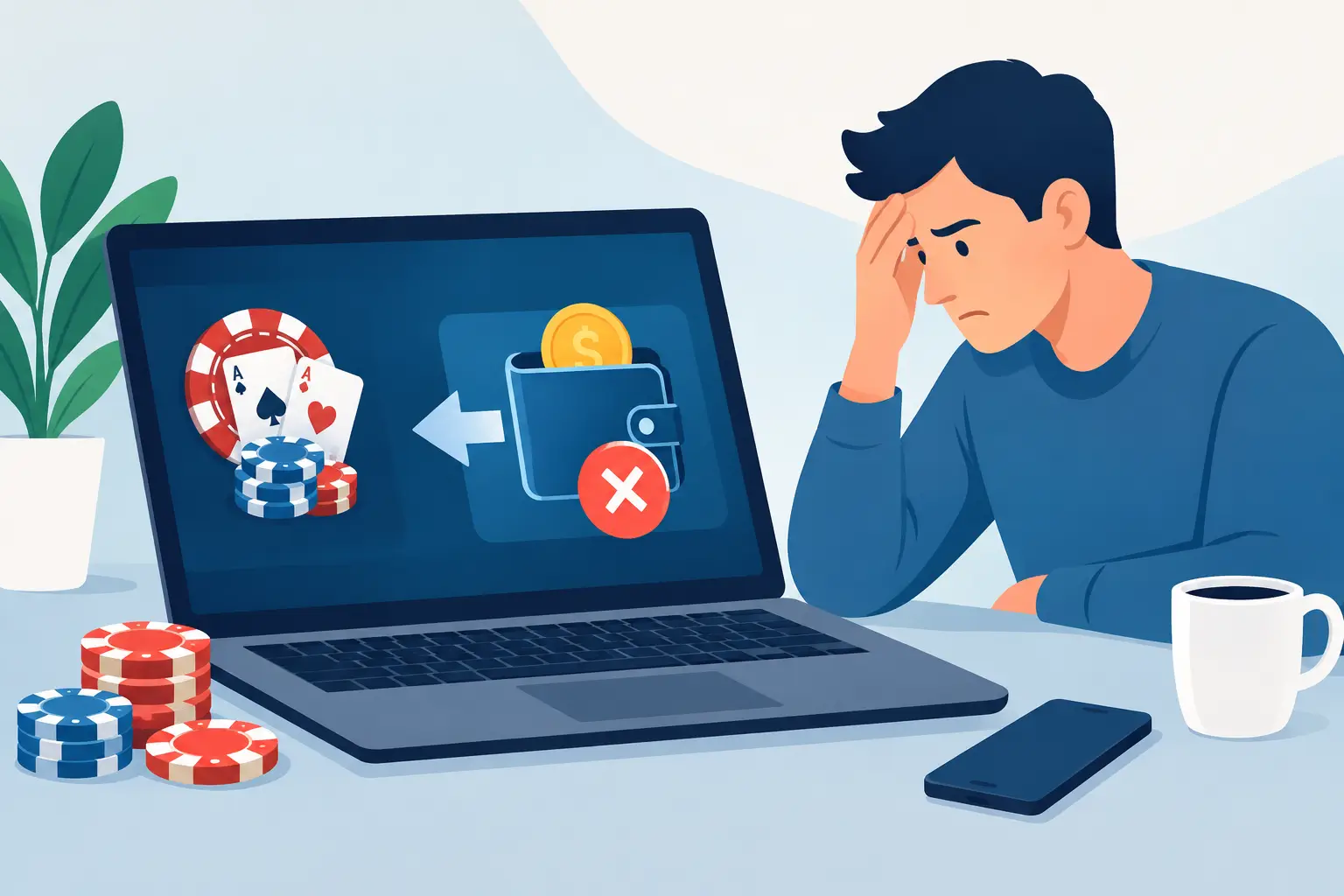
A casino complaint resolution service is most useful when a player has already tried the casino’s normal support channels and received no meaningful answer. It is not a shortcut to a guaranteed payout, and it cannot reverse every disputed result. Its value is in turning a frustrating account issue into a documented case: what happened, what the casino said, which terms apply, and what evidence supports the player’s position.
For US-facing players using offshore, crypto, or internationally licensed casinos, this distinction matters. The regulator available to the casino may be outside the player’s home jurisdiction, payment reversals may be limited, and a support agent’s promise may not match the written withdrawal or bonus rules. A well-prepared complaint gives the operator, a licensing body, or an independent case reviewer something specific to assess.
When a Casino Complaint Resolution Service Can Help
Complaint support is most relevant when the dispute involves a clear operational decision rather than ordinary disappointment with a gambling outcome. Common examples include a pending withdrawal that exceeds the operator’s published timeframe, an account closed during verification, a bonus balance removed without a clear explanation, or a deposit credited incorrectly.
It can also help when a casino claims that a player breached terms but does not identify the rule, transaction, game, or activity involved. The first question is not whether the player or casino is automatically right. It is whether the facts can be documented against the applicable terms and communications.
A service may organize the case, identify missing evidence, explain the likely escalation path, and request a substantive response from the operator. Where a casino has a stated complaints procedure, the case should normally follow it first. Skipping straight to public accusations or third-party escalation can make a resolution harder, especially if the casino has not had a fair opportunity to review the evidence.
What a Casino Complaint Resolution Service Cannot Do
No legitimate service should promise to recover funds, force a casino to reopen an account, or guarantee a regulator will rule for the player. The outcome depends on the casino’s terms, the licensing jurisdiction, the available evidence, and whether the operator is actually subject to effective oversight.
This is particularly relevant with unlicensed or lightly regulated sites. A casino may display a license claim that requires independent confirmation, or it may operate through a brand, company, and domain structure that is difficult to verify. An active website is not proof that a complaint can be enforced. Operating status is not a safety endorsement.
A complaint service also cannot undo a legitimate result simply because it feels unfair. If a player accepted a bonus with a restricted-game rule, exceeded a maximum bet, used an unsupported payment method, or failed identity verification, the written terms may support the casino’s decision. The terms still need to be applied consistently, but a strong complaint must address the actual issue rather than ignore inconvenient facts.
Build the Record Before You Escalate
The quality of the evidence often determines whether a complaint receives a serious review. Start by preserving records before chat messages expire or account access changes. Screenshots should show dates, transaction IDs, balance figures, and relevant account details where possible. Do not edit screenshots in a way that removes context.
Create a short timeline that begins with the deposit, bonus claim, wager, verification request, or withdrawal request that triggered the dispute. Include the dates and times of chats and emails, the names or reference numbers provided by support, and the response received. If the casino’s terms changed during the dispute, save the version that was available when you played.
The most useful case file usually includes four types of material:
- Account and transaction records, including deposit, withdrawal, and blockchain transaction IDs where relevant.
- Copies of the bonus terms, withdrawal policy, and verification requirements that apply to the case.
- Screenshots or exports of chat and email exchanges with casino support.
- A factual timeline stating the amount disputed, the requested resolution, and the casino’s stated reason for refusing or delaying it.
Keep the complaint focused. A withdrawal dispute worth $500 can be weakened by pages of unrelated claims about game quality, slow live chat, or a general lack of trust. Those concerns may be worth reporting separately, but they do not replace evidence about the disputed transaction.
A Practical Escalation Process
Start with the casino’s own support team and ask for a written response. If frontline chat cannot resolve the issue, request escalation to the payments, verification, risk, or complaints department, depending on the problem. Ask direct questions: Which term was breached? Which transaction is under review? What documents are missing? What is the expected review date?
If the response remains vague, submit a formal complaint through the operator’s published process. State the facts in chronological order, attach the supporting records, and specify the remedy you are seeking. That may be payment of a pending withdrawal, restoration of a balance, an explanation of a bonus adjustment, or a documented account review.
Allow the operator a reasonable response period based on its stated policy. Repeatedly opening new chat tickets can create conflicting records and delay review. One clear case reference is more useful than ten disconnected conversations.
When internal escalation fails, the next route depends on the casino’s verified license and complaint policy. Some licensed operators name an external dispute body or provide a regulator contact. Others offer no independent path, or the named authority may have limited power over player disputes. Confirm the casino’s current licensing information before presenting the case to any outside body.
A complaint resolution service can be valuable at this stage because it can assess whether the route is real, whether the evidence meets the likely standard, and whether further escalation is proportionate to the amount and facts involved. For crypto transactions, it may also help distinguish a casino-account issue from a wallet, network, or exchange problem.
How to Judge a Complaint Support Provider
Be cautious with anyone charging large upfront fees, claiming special access to casino executives, or promising a refund before reviewing your records. A trustworthy service should explain its process, fees if any, privacy handling, and limitations in plain language. It should not ask for passwords, seed phrases, remote device access, or unnecessary identity documents.
Look for a provider that separates verified evidence from the player’s interpretation. A good case assessment may tell you that the casino’s conduct appears concerning, that more documentation is needed, or that the available terms likely favor the operator. That answer may be disappointing, but it is more useful than a promise designed to win your confidence.
TopBookie’s complaint-oriented research approach is built around the same principle: examine the operator’s status, licensing claims, documented terms, payment patterns, and reported risk factors before treating a dispute as straightforward. A casino’s marketing claims should never be the only evidence used to judge its reliability.
Reduce the Risk Before a Dispute Starts
The best complaint is the one you never need to file. Before depositing, check whether the casino identifies its operating company, license, payment rules, verification process, and withdrawal conditions. Read the bonus terms before opting in, especially wagering requirements, maximum bet limits, game contribution rules, and withdrawal caps.
Test a new casino cautiously. A modest first deposit and an early withdrawal request can reveal more about payment handling and verification than a large bonus offer. Keep records from the beginning, particularly when using cryptocurrency, because blockchain transfers are irreversible once confirmed and casino crediting issues can be harder to untangle later.
If a casino refuses to explain a material decision, changes its reasoning, or makes withdrawal conditions difficult to locate, pause further deposits. Clear documentation and early caution will not guarantee a favorable outcome, but they put you in a far stronger position if a complaint needs to be reviewed.