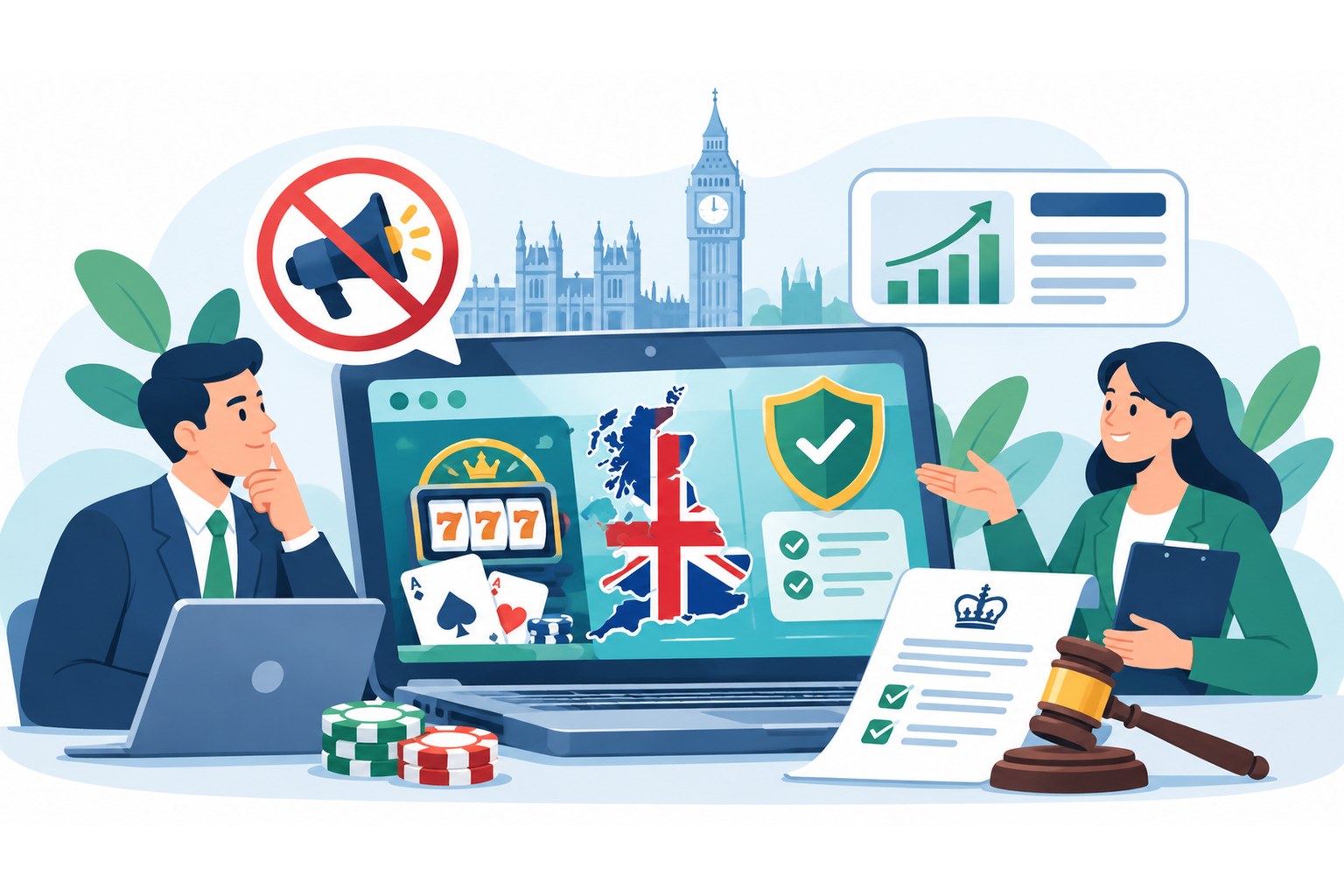
The UK government has officially rejected calls for a comprehensive ban on gambling advertising. However, online casinos and betting companies could still face additional marketing restrictions as authorities strengthen their efforts to reduce gambling-related harm and tackle illegal operators.
The decision was confirmed on November 19, 2026, in the government's formal response to the House of Lords report, Gambling Harm—Time for Action, published on September 17.
While licensed gambling businesses can continue advertising their services within existing regulations, the government is looking to expand its legal powers over online gambling advertising.
Why the UK Rejected a Complete Gambling Advertising Ban
The government believes that a blanket advertising ban would not effectively target the consumers most vulnerable to gambling-related harm.
It also raised concerns that removing advertising from licensed gambling businesses could make it more difficult for consumers to distinguish regulated operators from illegal gambling websites.
The potential financial consequences for sporting organisations were another consideration. The government has rejected extending gambling sponsorship restrictions to football clubs below the Premier League and other sports at this time.
However, ministers have acknowledged that gambling advertising can influence consumer behaviour and contribute to gambling-related harm. Further restrictions remain possible where supported by evidence.
UK Gambling Commission Expands Its Crackdown on Illegal Casinos
On November 9, 2026, the UK Gambling Commission announced that it was expanding its enforcement strategy against illegal gambling operations.
Rather than concentrating solely on removing websites, the regulator is increasingly targeting payment processing, advertising, financial assets and the suppliers behind unlicensed gambling platforms.
According to the Gambling Commission, enforcement activity has already resulted in:
-
More than 1,000 cease-and-desist notices issued during the 2026/27 reporting year so far.
-
Over 7.8 million URLs reported to search engines.
-
Over 3 million URLs removed from search results.
-
More than 2,200 websites referred for disruption.
-
Over £40 million in suspected criminal funds referred to partner agencies for potential asset freezing since January 2026.
Importantly, the £40 million figure represents funds referred for potential freezing, not money that has already been seized.
The Commission continues to work with financial institutions, technology companies, gambling businesses and law enforcement agencies to disrupt illegal gambling activity.
What Does This Mean for Gambling Affiliates and Influencers?
The government has also rejected a recommendation to introduce a separate licensing regime for gambling affiliates.
Under the current framework, licensed gambling operators remain responsible for the marketing activities of their affiliate partners. The Advertising Standards Authority (ASA) also regulates affiliate advertising content and placement.
A complete legislative ban on influencer gambling advertising is not currently being considered.
Nevertheless, restrictions on gambling advertisements with strong appeal to children remain in place. Authorities are also examining potential measures to restrict content from influencers promoting unlicensed gambling operators.
Could Online Gambling Advertising Face Further Restrictions?
One of the most significant developments is the government's intention to address Section 333(6) of the Gambling Act 2005.
The existing provision limits ministers' ability to regulate certain aspects of online gambling advertising. Changing it would require primary legislation.
The government has confirmed its intention to address this limitation when a suitable legislative opportunity becomes available.
Separately, a government consultation launched on July 15, 2026, proposed banning sponsorship and certain forms of advertising involving gambling operators without a Gambling Commission licence.
These proposals should not be confused with restrictions that have already entered into force.
Is Online Gambling Being Banned in the UK?
No. Online gambling remains legal in Great Britain when provided by appropriately licensed operators.
However, several important regulatory changes have already been introduced:
-
A £5 maximum stake per online slot game cycle for players aged 25 and over, effective April 9, 2025.
-
A £2 maximum stake per online slot game cycle for players aged 18 to 24, effective May 21, 2025.
-
A maximum 10x bonus wagering requirement, effective January 19, 2026.
-
A ban on promotional offers combining different types of gambling products, effective January 19, 2026.
Northern Ireland operates under separate gambling arrangements.
What Comes Next for the British Gambling Market?
The government's rejection of a comprehensive advertising ban does not mark the end of gambling reform.
An evaluation of measures introduced under the Gambling Act Review is expected to report before the end of 2026. Its findings could influence future policy decisions.
The Gambling Commission is also preparing for the phased introduction of financial risk assessments designed to identify high-spending customers experiencing financial difficulties.
For now, the direction of British gambling regulation is clear. The government is not seeking to eliminate the regulated online gambling industry, but it is placing greater emphasis on consumer protection, responsible advertising and enforcement against illegal operators.
Whether these measures will successfully reduce gambling-related harm without increasing demand for unlicensed gambling remains an important question heading into 2027.