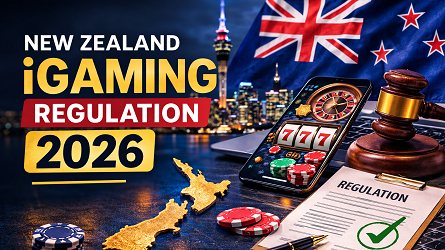
New Zealand iGaming Regulation Moves Closer as 2026 Licensing Timeline Takes Shape
New Zealand is moving closer to one of the most important iGaming changes in its history, as the country prepares to launch a regulated online casino market with a formal licensing system in 2026. For years, online casino gambling has sat in a grey area for New Zealand players, with offshore brands serving the market but without a dedicated domestic framework. That is now changing, and the upcoming model could reshape how operators, affiliates, and players approach the country over the next 12 to 18 months.
The latest sign of progress is that the Online Casino Gambling Bill has advanced through Parliament, with New Zealand’s parliamentary records showing it was read a second time on 3 March 2026. That makes this more than just a policy discussion. The market is now moving through a live legislative process, and the industry is starting to get a clearer picture of what launch could look like, how licences will be allocated, and which restrictions will define the new environment.
According to the Department of Internal Affairs, up to 15 online casino licences will be available under the new system. Each licence will cover a single brand, no one can hold more than three licences, and the initial term will be up to three years with the possibility of renewal for a further five years. That creates a controlled market from day one and suggests New Zealand is aiming for a relatively tight licensing model rather than a wide-open competitive field. For operators, that raises the stakes around market entry. For players, it signals that only a limited number of approved brands may ultimately gain the right to operate legally under the new regime.
The current timeline is one of the biggest reasons this story matters right now. The Department says the Act is expected to commence from 1 May 2026, with detailed regulations likely to follow in mid-2026. From July 2026, the three-stage licensing process is expected to begin, starting with expressions of interest. An auction is then expected in September 2026, followed by the formal application phase in October 2026. That means the race for market access is no longer theoretical. Interested operators are moving into real preparation mode.
One of the most notable features of the New Zealand model is that licences will be awarded through a competitive auction. Only applicants that pass the initial expression-of-interest stage will be invited to take part. That first stage is expected to assess key factors such as compliance history, capital adequacy, criminal background issues involving dishonesty, and broader reputational concerns. In practice, this means the market is likely to favour well-prepared and well-capitalised groups that can satisfy both regulatory scrutiny and a competitive bidding process.