A crypto deposit can arrive in minutes, but that does not make the casino behind the wallet address trustworthy. Crypto casino payment methods change how money moves, not the need to investigate an operator’s licensing claims, withdrawal record, bonus rules, and complaint history before you send funds.
For US-facing players in particular, the practical questions are broader than “Does this site take Bitcoin?” You need to know which network it accepts, whether the same currency can be withdrawn, whether account verification is required before cashing out, and whether the casino’s terms create conditions that make a withdrawal difficult. Operating status is not a safety endorsement, and a cryptocurrency option is not evidence of fair dealing.
How crypto casino payment methods work
At a basic level, a player sends cryptocurrency from a personal wallet or supported service to a deposit address supplied by the casino. The casino credits the balance after the transaction receives the number of blockchain confirmations specified in its payment policy. Winnings are then requested through the casino, which sends crypto to a withdrawal address provided by the player.
That process sounds direct, but the casino still controls the account ledger, game access, withdrawal approval, and support process. A blockchain can show that you sent funds to an address. It cannot prove that an operator will honor a withdrawal, apply its bonus terms fairly, or resolve an account dispute.
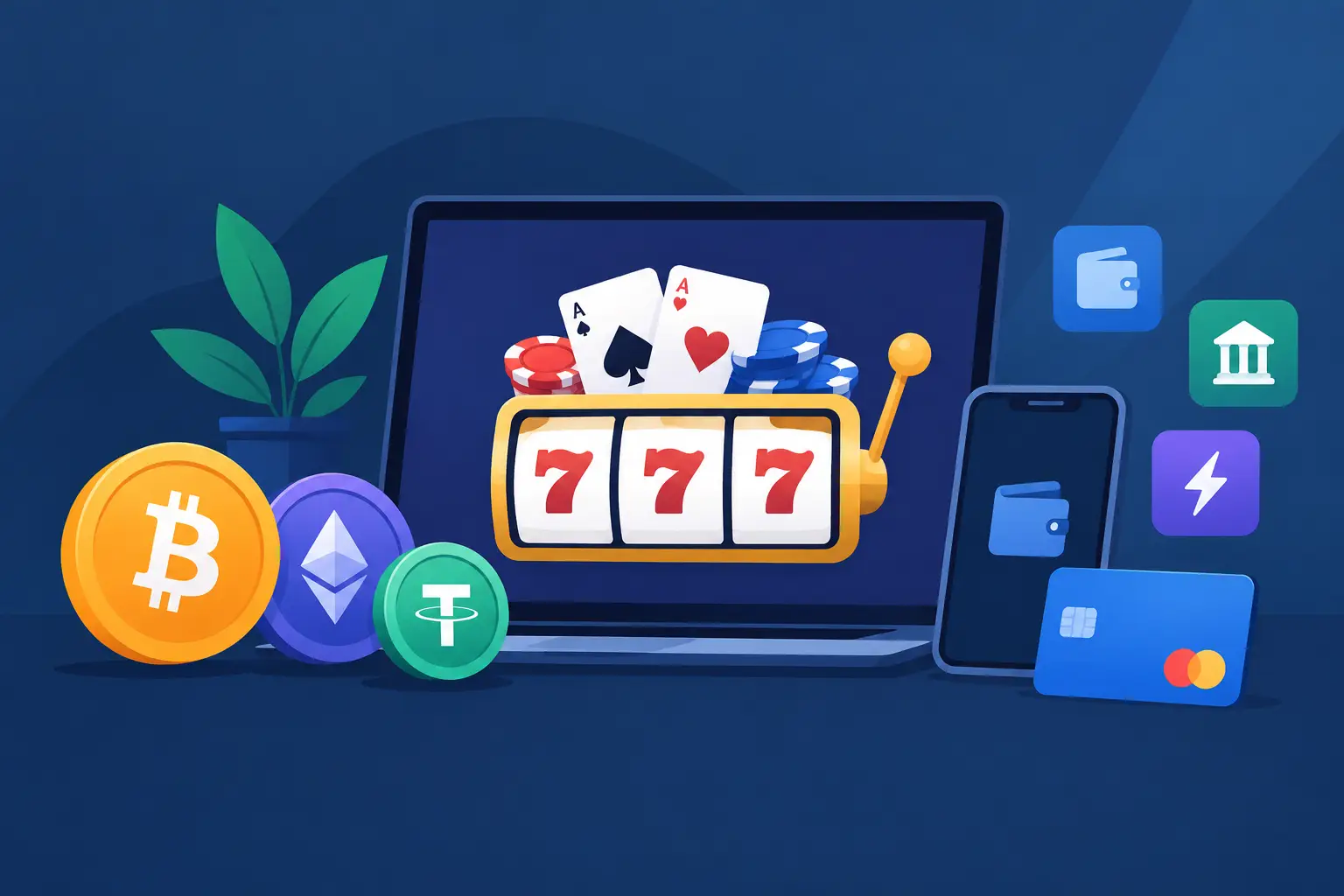
The available options vary by operator. Bitcoin remains common because of its broad recognition. Ethereum-based assets, Litecoin, Bitcoin Cash, and stablecoins may also be offered. Some casinos list a coin but only support one network for it. That distinction matters: sending an asset over an unsupported network can result in a loss that may not be recoverable.
Common crypto casino payment methods compared
Bitcoin is often the most recognizable choice, but network fees and confirmation times can rise when the network is busy. For a small deposit, the fee may represent a meaningful part of the amount sent. Casinos may also set a minimum deposit that is higher than a player expects after network costs.
Ethereum and Ethereum-based tokens can offer wide wallet compatibility, yet gas fees can be unpredictable. A site that accepts a stablecoin on Ethereum may not accept the same stablecoin on another network. Never assume that a token name alone is enough. Confirm the exact asset and network shown in the cashier before transferring anything.
Litecoin and similar lower-fee networks are sometimes attractive for smaller transactions, depending on what the casino supports. Their main advantage is cost efficiency rather than added player protection. The same due-diligence standard applies to the operator.
Stablecoins are designed to track a reference currency, usually the US dollar. They can reduce the price swings associated with holding Bitcoin or Ethereum between deposit and withdrawal. However, they introduce separate considerations: the issuer, the supported blockchain, possible redemption limits, and the fact that a casino may convert balances internally under its own stated exchange rules.
The best method depends on the casino’s verified cashier terms and your purpose. A player making a modest test deposit may prioritize low fees. A player who does not want winnings exposed to market volatility may prefer an eligible stablecoin. Neither decision should be made until the withdrawal policy has been checked first.
Check the withdrawal path before you deposit
The central payment question is not what the casino accepts. It is how it pays.
Review whether the operator requires withdrawals to be made in the same cryptocurrency used for deposit. Some casinos permit conversions, while others do not. Check the stated minimum withdrawal, processing window, daily or monthly limits, and any network fee deducted from the payout. If the site does not make these details clear, treat that as a concern requiring confirmation from support before you fund the account.
Also find out when identity verification is triggered. A casino may advertise crypto as fast or private while still requiring Know Your Customer checks before a first withdrawal, after a large win, or when account activity is flagged. Verification itself is not automatically a red flag. The risk is a vague policy that appears only after funds are locked in.
Save records as you go: the deposit address, transaction hash, amount, date, exchange rate if applicable, casino cashier screen, and all support conversations. These records can be useful if a payment is not credited or a withdrawal is delayed. They also make it easier to distinguish a blockchain delay from an internal casino review.
Network errors are costly and usually final
Crypto transactions are generally irreversible. If you send Bitcoin to the wrong address, select an unsupported network, or copy an address from an untrusted source, there may be no practical way to reverse the transfer.
Use the casino’s logged-in cashier, not a wallet address sent in an unsolicited message or posted in a chat group. Recheck the first and last characters of the address and the selected network. For a first-time deposit, a small test transaction can be a sensible precaution if the casino’s minimums and fees allow it.
Do not rely on an exchange account as your primary casino wallet without reading both parties’ rules. Some exchanges restrict gambling-related transfers or may hold a transaction for compliance review. A self-custody wallet gives the player more direct control over the transfer, but it also places responsibility for private keys, recovery phrases, and address accuracy entirely on the player.
Bonuses can complicate crypto withdrawals
Crypto deposits frequently qualify for casino bonuses, but eligibility is not universal. A promotion may exclude particular coins, payment routes, games, or withdrawal methods. A bonus can also carry wagering requirements, maximum-bet rules, time limits, and a maximum cashout provision. Those conditions can matter far more than the advertised percentage.
Read the bonus terms before opting in, especially if you intend to withdraw promptly. Depositing with crypto does not bypass wagering conditions. In fact, a player who mixes a bonus balance with a cash balance may find that the casino applies restrictions to the entire withdrawal request, depending on its terms.
A practical approach is to decide whether you want a bonus before depositing. If the answer is no, confirm that the casino allows a cash-only deposit and that declining the offer is recorded correctly. If the answer is yes, calculate the required wagering and check whether the games you plan to play contribute at the stated rate.
Privacy claims deserve skepticism
Crypto can reduce the amount of financial information shared with a casino at the deposit stage, but it does not make online gambling anonymous or risk-free. Blockchain activity is public, casino accounts can be linked through verification information, and platforms may monitor transactions for security or compliance reasons.
Be cautious with any operator that markets “no verification” as an absolute promise while providing little information about ownership, licensing, customer support, or withdrawal rules. A legitimate identity check can be frustrating, but an operator with no accountable business details may be harder to challenge when a problem occurs.
For US players, availability is another issue that requires care. Gambling laws, licensing rules, and enforcement vary by state, and an offshore casino’s willingness to accept a player does not establish that play is legal where that player lives. Tax obligations may also apply to gambling activity and crypto transactions. Consider obtaining qualified legal or tax advice for your circumstances rather than relying on casino marketing.
A player-first checklist for crypto deposits
Before choosing among crypto casino payment methods, verify the operator’s current domain and status, review its claimed license against the relevant regulator’s records where possible, and read recent player complaints with context. A complaint alone does not prove misconduct, but recurring reports involving unpaid withdrawals, closed accounts, or changing terms deserve close attention.
Then inspect the cashier and terms for the exact coin, network, minimum deposit, minimum withdrawal, fees, processing time, verification rules, and bonus exclusions. Test support with a specific question if a policy is unclear, and keep the response. Generic assurances such as “instant payouts” are not a substitute for written conditions.
TopBookie’s approach is to treat payment information as one part of a wider operator assessment. A convenient wallet option can be useful, but it should never outweigh unresolved concerns about licensing accuracy, payout reliability, or documented player risk.
Your first crypto transaction with any casino should be a decision you can afford to reverse only emotionally, not technically. Start small, document every step, and judge the operator by the clarity of its terms and its handling of a withdrawal - not by the number of coins displayed in its cashier.