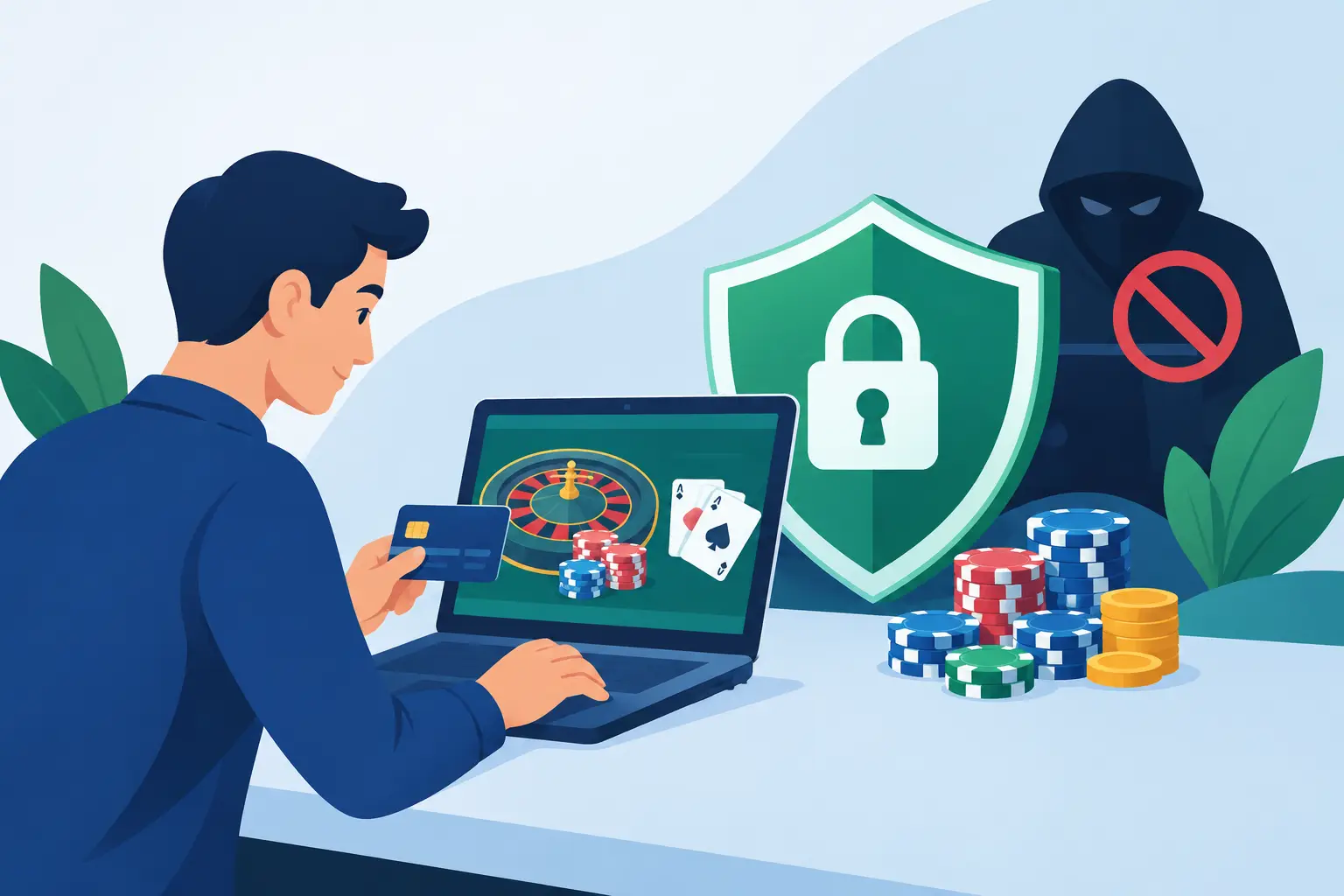
A casino can have polished graphics, a large game lobby, and a welcome offer that looks competitive while still presenting serious risks. The moment that matters most is not when you win. It is before you register, deposit, upload identification, or accept a bonus. Effective casino fraud prevention is a practical research process that helps players separate ordinary gambling risk from avoidable operator, payment, and account-security problems.
For US players considering offshore, crypto, or internationally licensed casinos, that distinction matters. An operator may accept American players without being regulated in the player's state. It may be operating under a license that offers limited dispute options. Or it may be using a lookalike domain with no connection to the casino brand it claims to represent. Operating status is not a safety endorsement.
Start casino fraud prevention with the operator
A real license is not a blanket guarantee, but the absence of verifiable licensing information is a clear reason to pause. Check which legal entity operates the casino, where it is licensed, and whether the license record matches the brand and website domain you are using. A generic logo in a footer is not enough. Licensing information should be specific enough to investigate.
Be cautious when a site displays a regulator's name but provides no license number, company name, or jurisdiction. The same applies when the license details appear only in an image, conflict with the terms and conditions, or belong to a different brand. Some operators use broad statements such as “fully licensed” without identifying who issued the license or what player protections apply.
The domain deserves equal attention. Fraudulent sites often imitate established casino names with extra words, altered spelling, unusual country extensions, or a different top-level domain. Search the exact domain rather than relying on a social media ad, messaging app promotion, or a link sent by an unfamiliar account. If a casino has changed domains, confirm that the new address is acknowledged through an official, verifiable channel.
TopBookie’s operator research approach is built around this point: a casino listing, active site, or advertised offer should be treated as a starting point for review, not proof that an operator is safe.
Read the terms that control your money
Fraud is not limited to fake websites. A legitimate-looking casino can still create player risk through unclear, contradictory, or selectively enforced terms. Before depositing, find the rules governing withdrawals, identity checks, bonuses, account closures, and restricted countries. If these documents are difficult to locate or written so vaguely that a player cannot understand the conditions, consider that a material concern.
Withdrawal rules reveal more than deposit options
Deposit methods are designed to be visible. Withdrawal conditions are where many disputes emerge. Look for information on minimum and maximum cashout amounts, processing times, verification requirements, withdrawal fees, payment-method restrictions, and whether the casino can reverse a withdrawal without your approval.
A request for identity verification is not automatically suspicious. Reputable operators use it to meet anti-money-laundering and age-verification requirements. The warning sign is inconsistency: a casino that accepts deposits instantly but discloses verification demands only after a player wins, repeatedly rejects clear documents without explanation, or asks for excessive information through unsecured channels.
Do not send ID documents through a public chat, social media direct message, or an email address that does not match the casino’s official domain. Use the account area only after confirming that you are on the correct website. Keep copies of what you submit and the date it was sent.
Bonus terms can create predictable disputes
A large match bonus is not valuable if the wagering requirement, game contribution rules, maximum bet limit, or withdrawal cap makes it unrealistic. Check whether the bonus applies to your deposit method, whether certain games contribute little or nothing toward wagering, and whether the offer expires before its requirements can reasonably be met.
Pay special attention to clauses allowing a casino to confiscate winnings for “bonus abuse” without defining the conduct. Casinos can reasonably restrict duplicate accounts, prohibited betting patterns, and promotional misuse. But a fair policy explains those restrictions clearly before a player opts in. Ambiguous rules give an operator too much room to decide after the outcome is known.
Protect your account from impersonation and theft
Casino fraud prevention also involves protecting yourself from criminals who target players rather than casinos. These scams commonly begin with a message claiming there is a pending withdrawal, an account problem, a VIP upgrade, or an exclusive crypto bonus. The goal is usually to collect login credentials, payment details, one-time verification codes, or wallet access.
Use a unique password for every gambling account and turn on two-factor authentication when it is available. A password manager can help create and store long passwords without reusing them across casinos, email accounts, and financial services. Your casino password should never be the same as the password for the email account used to reset it.
No legitimate support representative needs your password, a two-factor code, or a crypto wallet seed phrase. A casino may ask you to confirm personal details during a support interaction, but it should not ask you to disclose credentials that allow someone else to take over the account. End the conversation if a representative pressures you to act immediately or insists on moving from the official support channel to Telegram, WhatsApp, or a personal email address.
Crypto users face an additional problem: transactions are generally irreversible. Confirm wallet addresses character by character, use the correct network, and make a small test transaction when the amount is significant. A casino changing its deposit address without an announcement inside your authenticated account deserves verification before you send funds.
Recognize payment patterns that should stop a deposit
Payment friction is sometimes operational. Banks can decline gambling transactions, and offshore payment processors can change. That does not mean every declined card signals fraud. The concern is a repeated pattern of unexplained payment redirection, misleading merchant descriptions, pressure to use a personal wallet, or instructions to buy cryptocurrency from an individual rather than through a recognized exchange or wallet service.
Avoid operators that ask for payment through gift cards, person-to-person transfers, or a crypto address sent only in chat. Be wary of agents who promise to “process” a withdrawal after you first pay a tax, clearance charge, account-unlocking fee, or verification deposit. Casinos may apply disclosed fees under their terms, but an upfront payment demanded to release winnings is a classic fraud indicator.
Use a payment method that creates records you can retain. Save deposit confirmations, withdrawal requests, transaction IDs, bonus opt-in screens, and relevant support transcripts. This documentation will not guarantee a resolution, particularly with an offshore operator, but it makes a complaint far stronger than a general recollection of what happened.
Investigate complaints without treating every complaint as proof
Player complaints are valuable evidence, but they require context. A complaint may involve a genuine delayed payout, a misunderstanding of bonus rules, an incomplete verification process, or a player who breached a disclosed condition. One angry review does not establish a pattern. Dozens of reports describing the same unexplained account closure, withdrawal delay, or support failure should carry more weight.
Look for details: dates, amounts, the stated reason for the dispute, documents requested, and whether the casino responded publicly or through a documented channel. Give more weight to complaints that include evidence and to recurring reports that align with the operator's written terms. Be skeptical of both extremes - review pages filled only with identical praise and complaint threads that offer no specifics.
If you already have a dispute, stop making additional deposits while it is unresolved. Write a concise timeline, retain screenshots, and ask the casino for its final written position. If the operator cites a term, request the exact clause. Escalation options depend on the licensing jurisdiction and whether the casino is actually covered by the regulator it claims, so confirm that relationship before assuming a regulator can intervene.
A safer decision is often a slower one
The safest players are not those who can identify every bad casino at a glance. They are the ones who refuse to let urgency make the decision. A countdown timer, a “limited” bonus, or a support agent pushing a deposit should not override missing license details, unclear withdrawal terms, or a domain that cannot be verified.
Take the extra ten minutes before funding an account. Read the conditions that apply after a win, verify the operator behind the brand, and protect the credentials and payment details that no bonus is worth losing.